Pakistan National Cricket Team Vs India National Cricket Team Timeline
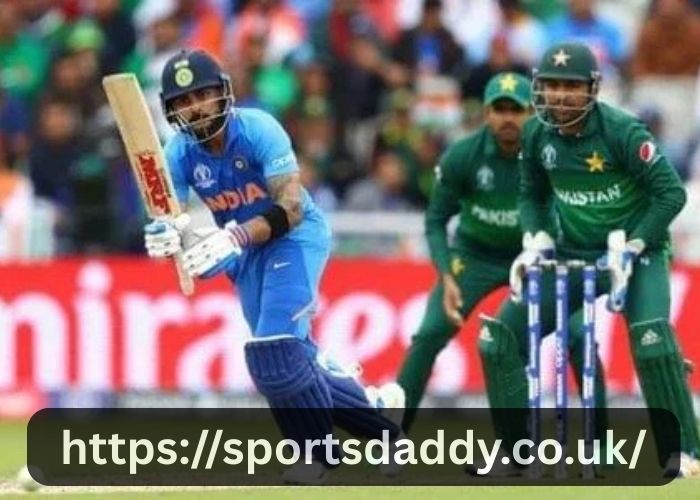
India and Pakistan share one of cricket’s fiercest rivalries, rooted in the 1947 partition of British India, as reflected in the Pakistan National Cricket Team Vs India National Cricket Team Timeline shaped by deep historical and political tensions.
When two arch-rivals play, it draws more than 500 million spectators and creates an unforgettable atmosphere. This article will highlight some of the key moments from their iconic rivalry.
| # | Date | Format | Venue | Pakistan Score | India Score | Result |
|---|---|---|---|---|---|---|
| 1 | 28 Sep 2025 | T20I (Asia Cup Final) | Dubai | 146 (19.1) | 150/5 (19.4) | India won by 5 wickets (cricketopinion.com) |
| 2 | 21 Sep 2025 | T20I (Asia Cup Super Four) | Dubai | 171/5 (20) | 174/4 (18.5) | India won by 6 wickets (cricketopinion.com) |
| 3 | 14 Sep 2025 | T20I (Asia Cup Group) | Dubai | 127/9 (20) | 131/3 (15.5) | India won by 7 wickets (cricketopinion.com) |
| 4 | 23 Feb 2025 | ODI (ICC Champions Trophy) | Dubai | 241 (49.4) | 244/4 (42.3) | India won by 6 wickets (crickettimelines.com) |
| 5 | 09 Jun 2024 | T20I | New York | 113/7 | 119 | India won by 6 runs (cricketopinion.com) |
The first ever series
India-Pakistan cricket rivalry is one of the fiercest in sports history, steeped with both national pride and cultural meaning.
It all began when two newly independent nations first faced each other at Lord’s in 1952 in a match which carried not only sporting but also political weight.
This was the inaugural Test match between Pakistan and India that would prove both thrilling and controversial.
Pakistani player Fazal Mahmood made history when he took 12 wickets – breaking an Indian record previously set by spinner Bishan Bedi in a first-class match against touring South Africans earlier that year – but unfortunately India held on for victory which dealt a severe blow to Pakistan’s emerging reputation of competing with some of the greatest teams worldwide.
Tense relations have existed between India and Pakistan ever since they fought their first Test match at Wankhede Stadium in 1991; as workers from the Hindu nationalist Shiv Sena party dug up part of its pitch on match day; leading to its cancellation along with subsequent series.
More recently, Pakistan President Pervez Musharraf’s visit in 2005 — purportedly for cricket purposes but quickly taking on more of an atmosphere similar to an international summit meeting — quickly turned into an occasion for discussing long-running Kashmir disputes.
Pakistan continued their steady progress through ODIs and T20s that followed; though their achievements weren’t seamless.
While they exited early World Cups in 2003 and 2007, they won 2009 T20 world title before reaching final of Champions Trophy before losing against arch-rival India. Batting inconsistency is still an issue; as shown by their collapse from 113/1 to 146 all out against Sri Lanka at Asian Cup 2025 final held on a pace-friendly surface in Karachi.
Pakistani national cricket team’s future remains in question amid internal issues and a loss of momentum, so PCB chief Mohsin Naqvi met with Prime Minister Shahbaz Sharif on Monday in order to reach an agreement for whether Pakistan will play India at the forthcoming World Cup tournament in England and Wales or not.
If Pakistan opts out, however, their share of annual ICC revenue – amounting to 5.75% – would be forfeited, amounting to an immense loss for cash-strapped national boards alike.
The first ever ODI
On October 1, 1978, India and Pakistan met for their inaugural One-Day International. India triumphed by four runs in an exciting contest in Quetta with each team playing 40 overs rather than the modern 50.
Bishen Singh Bedi led India, while Mohinder Amarnath scored half a century and became the inaugural recipient of an India-Pakistan ODI Man of the Match award.
This marked the initial high-stakes battle between these two teams and set in motion an intense rivalry that continues today. Their fierce matches ignite passions of millions of fans worldwide and possess deep cultural significance beyond sports alone.
Cricket remains one of the world’s biggest unifying forces despite tensions between India and Pakistan; every encounter creates its own brand of drama that draws millions into watching this international rivalry.
India and Pakistan’s rivalry has produced some of the greatest moments in cricket history and had an enormous effect on their relationship, shaping both countries’ histories, identities, and cultures.
India currently enjoys an edge in most forms of cricket competition; however, in One-Day Internationals they are nearly even.
Over the course of 136 ODIs played between them, India won 78 matches while Pakistan secured 59 victories – further intensifying their rivalry and sparking heated encounters during major tournaments.
These matches have given millions of fans around the globe something to look forward to and a reason to live in countries with rival teams.
From an ICC Champions Trophy final matchup or T20 competitions – these matches always deliver.
India and Pakistan cricket matches have long been considered some of the greatest in sport’s history, making for compelling viewing decades after initial broadcast.
Their rivalry stands apart as it brings together two nations with long political histories and enormous fan bases for cricket – plus these matches bring passion-filled cheers that resonate across stadiums and living rooms in both nations!
The first ever T20
India and Pakistan engaged in their inaugural T20 match at the inaugural ICC World Twenty20 tournament held in South Africa in 2007.
It was an exhilarating affair, ending with India edging out Pakistan by five runs – marking their debut global win in this form and cementing them as one of cricket’s premier nations.
India-Pakistan cricket rivalry transcends mere sports; it represents pride, history and aspirations between two great nations.
Fans will continue to find enjoyment from watching India-Pakistan matches long into the future – from early encounters on domestic ground cricket fields through high stakes competition on international tours – making this rivalry an invaluable feature of international cricket.
Although relations between India and Pakistan remain tenuous, both nations have attempted to use cricket diplomacy.
To ease tensions, several series of cricket matches between these nations were played at neutral venues during the late 1980s and 1990s at neutral sites; their rivalry reached new heights when India won both 1992 and 1996 World Cup finals while Pakistan fell short in a 1999 quarter-final matchup.
Recently, India-Pakistan tensions have been reignited as both nations engaged in an uneasy diplomatic standoff.
Tensions were further raised when a Pakistani national cricket team player was attacked by Indian police while playing domestic match in Lahore.
2025 saw both teams renew their cricket rivalry, and it proved an absolute classic. Both sides put on an amazing display of batsmanship and bowling in an exhilarating final match; yet Indian team chose instead to hand their awards over to one of Pakistan’s prominent leaders, rather than take their awards on stage themselves.
India-Pakistan rivalry continues to fascinate cricket, only becoming more intense over time. India is expected to win another match at ODI World Cup which should only deepen this competition further.
The first ever Test match
India and Pakistan rivalry is one of the most intense in cricketing history. Their clashes draw passionate supporters as well as curious neutrals with its high-stakes drama.
Dating back to its earliest days of cricketing history, their rivalry has only strengthened over time – now back with us after being put off due to terrorist attacks that caused an unofficial suspension in 2008. Their Test match will mark its return after eight years apart!
Arunabha Sengupta revisits the first ever Test match between India and Pakistan at Delhi’s Feroze Shah Kotla Stadium on October 18, 1952. She explores both its historical importance as well as any political drama which unfolded as part of this encounter.
On a bright autumn morning, Abdul Hafeez Kardar and his team made it quickly from Lahore to Feroz Shah Kotla in two hours – covering thirty five miles along the way.
On the first day, Pakistan made an excellent start, as Rameez Raja and Shoaib Muhammad shared in a 79-run partnership before Raja was caught at slip by Kapil Dev and Javed Miandad fell cheaply to Ravi Shastri.
India’s batsmen struggled against Pakistani bowlers and were ultimately reduced to 216 all out – seemingly setting up a win for Pakistan – but managed to hold out and salvage a draw thanks to experience from senior players and some outstanding rookie performances.
Haris Rauf was Pakistan’s stand-out performer as he took four wickets against India’s first innings and missed most of their second innings due to back pain.
Additionally, he was fined for making remarks deemed politically inappropriate at post-match press conference; and dedicated his performance in honor of victims of Pahalgam attack and their respective armies – much to both parties’ satisfaction as well as being met with criticism from some quarters.
While his passion and dramatics were widely appreciated, some individuals also condemned them due to his actions taken against India by team Pakistan.
About the Author