South Africa National Cricket Team Vs Australian Men’s Cricket Team Timeline
South Africa was eventually able to form a competitive team after several unsuccessful years, yet due to international opposition to apartheid, an International Cricket Council ban prevented South Africa from touring internationally until 1991.
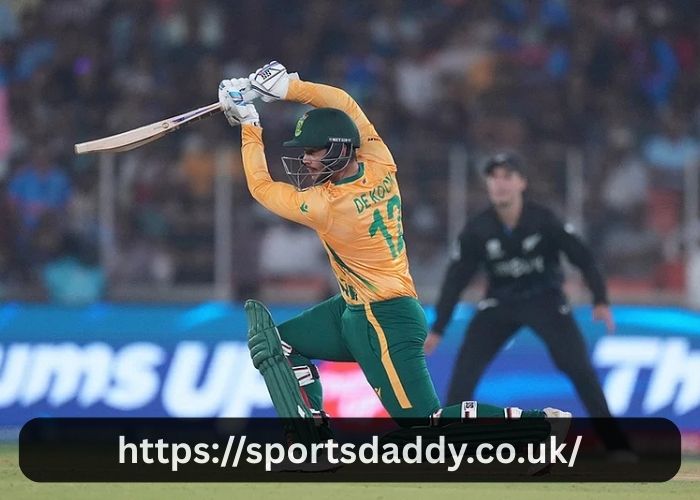
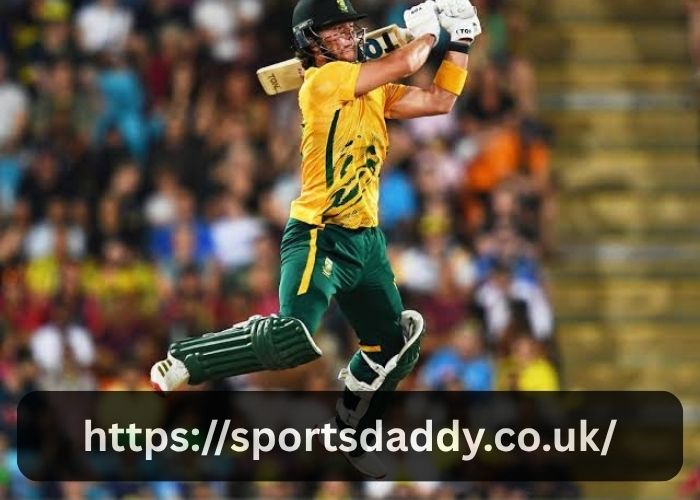
Dewald Brevis became the youngest T20 cricketer ever to score a century during South Africa’s stunning victory against Australia at Marrara Stadium, Darwin. Dubbed “Baby AB” by his teammates, Dewald smashed an astounding 119 from just 56 balls, making it one of the standout moments in the South Africa National Cricket Team Vs Australian Men’s Cricket Team Timeline and further strengthening the fierce rivalry between the two cricketing giants.
| Player | Role |
|---|---|
| Temba Bavuma (C) | Batter |
| Aiden Markram | Batting All-rounder |
| Ryan Rickelton | Wicketkeeper-Batter |
| Tristan Stubbs | Batter |
| David Bedingham | Batter |
| Tony de Zorzi | Batter |
| Wiaan Mulder | All-rounder |
| Marco Jansen | Bowling All-rounder |
| Kyle Verreynne (WK) | Wicketkeeper |
| Corbin Bosch | All-rounder |
| Kagiso Rabada | Fast Bowler |
| Lungi Ngidi | Fast Bowler |
| Keshav Maharaj | Spinner |
| Dane Paterson | Fast Bowler |
| Senuran Muthusamy | Spin All-rounder |
| Player | Role |
|---|---|
| Pat Cummins (C) | Fast Bowler |
| Travis Head | Batter |
| Usman Khawaja | Batter |
| Steve Smith | Batter |
| Marnus Labuschagne | Batter |
| Cameron Green | All-rounder |
| Beau Webster | All-rounder |
| Alex Carey (WK) | Wicketkeeper |
| Josh Inglis (WK) | Wicketkeeper-Batter |
| Mitchell Starc | Fast Bowler |
| Josh Hazlewood | Fast Bowler |
| Nathan Lyon | Spinner |
| Scott Boland | Fast Bowler |
| Matt Kuhnemann | Spinner |
| Sean Abbott | Fast Bowling All-rounder |
| Date | Tournament | Venue | Winner | Result |
|---|---|---|---|---|
| 16 Aug 2025 | 3rd T20I | Cairns | South Africa | SA won by 3 wickets |
| 12 Aug 2025 | 2nd T20I | Darwin | South Africa | SA won by 53 runs |
| 10 Aug 2025 | 1st T20I | Darwin | Australia | AUS won by 17 runs |
| 11 Jun 2025 | ICC World Test Championship Final | Lord’s | South Africa | SA won by 5 wickets |
| 16 Nov 2023 | ICC Cricket World Cup Semi-final | Kolkata | Australia | AUS won by 3 wickets |
| 12 Oct 2023 | ICC Cricket World Cup | Lucknow | South Africa | SA won by 134 runs |
| 17 Sep 2023 | 5th ODI | Johannesburg | South Africa | SA won by 122 runs |
| 15 Sep 2023 | 4th ODI | Centurion | South Africa | SA won by 164 runs |
| 12 Sep 2023 | 3rd ODI | Potchefstroom | Australia | AUS won by 3 wickets |
| 9 Sep 2023 | 2nd ODI | Bloemfontein | Australia | AUS won by 123 runs |
Origins
South Africa was the third country to play Test cricket, beginning their journey in 1889 against England XI organised by Major Warton. Although these matches weren’t officially designated Tests, Wisden noted they resembled them very closely!
South Africa made an impressive comeback to competitive cricket during their tour to Australia in 1910-11, thanks to Billy Zulch’s exceptional batting and Charlie Llewellyn’s solid all-round play. As a result, both five-match Test series were won with ease by South Africa.
South Africa was left isolated from international cricket due to the First World War until 1919-20, when an armistice restored normalcy and allowed regular tours by both domestic and overseas teams.
South Africa quickly established itself as one of the premier international sides despite remaining segregated due to separate national bodies for each racial group in the country governing cricket.
Though South African cricket was banned, some South African players managed to become world-class stars in first-class cricket such as Graeme Pollock, Eddie Barlow and Ali Bacher; others such as Clive Rice and Vintcent van der Bijl also rose through white-ball cricket’s ranks; however due to racial restrictions they never became members of South Africa national teams; while many talented Africans never got an opportunity to test cricket at all.
After the fall of apartheid in 1991, South Africa quickly established itself as an extremely competitive side. For much of the 1990s and 2000s, Australia and South Africa exchanged positions atop of world Test rankings, but South Africa proved themselves equally adept in shorter formats of cricket as they reached five ODI and two T20 World Cup semi-finals since their return.
Early years
South Africa was an unstoppable force during the early 1900s. Reggie Schwarz, Jimmy Sinclair, Dave Nourse and Aubrey Faulkner excelled as spin bowlers who excelled at googlys.
After impressing England during a five-match Test series in 1906 and receiving an official invitation to tour for official Tests by MCC for four official Tests in 1907 (won 4-1); Springboks cemented their status as one of world?s premier sides by winning 4-1.
After the apartheid ban was lifted in 1991, South Africa’s Springboks quickly resumed their former glory by winning several major tournaments and often holding top status in Test rankings.
Though South Africa remains predominantly white, cricket has gained increased interest from people of colour since the 1990s and produced many talented cricketers like AB de Villiers, Hashim Amla and Vernon Philander who have represented their nation with distinction at international cricket matches.
In ODIs, South Africa have been immensely successful. They were the first team ever to reach three consecutive semi-finals at a World Cup and four times won the ICC Champions Trophy before reaching two more finals.
Unfortunately, however, their reputation of “choking” at major tournaments followed them into 1999 when rain-rule farce resulted in Australia moving ahead at their expense. Still, the Proteas won more than their fair share of matches and are widely considered one of the greatest teams that never won a World Cup!
First Tests
South Africa first entered first-class and international cricket during the 1888-89 season, quickly developing into a force capable of competing with world class teams. Unfortunately, World War I interrupted international games until 1919-20.
1906-07 saw the return of international cricket with an England tour consisting of five official Test matches against South Africa. Many expected a humiliating series defeat, yet Sherwell inspired his spin bowlers with revolutionary googly deliveries which helped South Africans outwit and defeat England 4-1.
In 1890, South Africa national cricket team made its inaugural tour to Australia, widely considered to be its inaugural Test match.
At that time, Australia were considered one of the premier sides in world cricket led by Clem Hill’s bat and Victor Trumper’s wicket taking ability – two incredible men that South Africans easily defeated 4-1 and won their maiden overseas Test victory!
Over the next decade, South Africa steadily built upon their cricket team, becoming a dominant force. South Africa dominated Test and ODI series against top teams before being subject to an international ban due to apartheid laws in 1970.
Since then, South Africa has resumed test status and remains one of the strongest teams worldwide; notable performances by Jacques Kallis and Hashim Amla (who each scored over 10,000 Test runs for South Africa) stand out among many highlights for South Africans cricket fans.
First ODIs
On 5 January 1971 in Melbourne, as a last-minute replacement for an washed out Ashes Test match, an inaugural One Day International (ODI) took place – making history by being the inaugural international match played over 50 overs. It marked both a momentous moment in cricket history as well as being an occasionful milestone in cricketing history.
At first, both teams failed to reach 300 runs; Australia reached 198 while England posted 201. Once 300 was reached it marked that ODI cricket had come of age.
ODIs represent the pinnacle of limited-overs international cricket. Contested over one day and usually lasting seven hours, an ODI match marks the pinnacle of limited-overs cricket competition and also forms the format used for hosting World Cup tournaments every four years.
ODI cricket is unique in that it allows three “powerplays,” or P1, P2 and P3. During each powerplay, two fielders or less may be outside the 30-yard circle for 10 overs; then attacking or defensive fields are set accordingly for another 10 overs – designed to prevent teams from relying on defensive fields all throughout an innings and thus decreasing scoring rates; it has been instrumental in growing popularity of ODI as a form of cricket.
First T20Is
Twenty20 Internationals (T20Is) first came into being in February 2005. Unlike Test and ODI formats where teams play two innings each, T20 is limited to 20 overs per team per innings and thus more often played. Since its introduction, Twenty20 has become one of the most beloved forms of cricket around – played across over 100 countries worldwide!
T20 cricket brought cricket into the modern age. As an engaging, fast-paced format that attracts both fans and media worldwide, T20 cricket has expanded the sport beyond traditional cricket-playing nations and given it global appeal. In 2007, when T20 World Cup 1 kicked off, expanded from six teams to 12 for an unprecedented global reach that has never diminished since then.
In the South Africa National Cricket Team Vs Australian Men’s Cricket Team Timeline, one of the memorable ODI encounters saw South Africa bowl Australia out in the 41st over for 198. Keshav Maharaj starred with the ball, claiming five wickets—three bowled and two leg before wicket—to reduce Australia to 89/6. Mitchell Marsh fought back brilliantly with a superb 88, but he eventually ran out of partners as the required run rate continued to climb.
Lungi Ngidi also impressed with figures of 10-0-46-1, keeping the pressure on throughout the innings. Despite South Africa’s disciplined bowling effort, Australia ultimately emerged victorious by 40 runs in a match filled with drama, excitement, and high-quality cricket, making it another unforgettable chapter in the South Africa National Cricket Team Vs Australian Men’s Cricket Team Timeline.
Also Read : Bangladesh National Cricket Team Vs Australian Men’s Cricket Team Timeline
About the Author