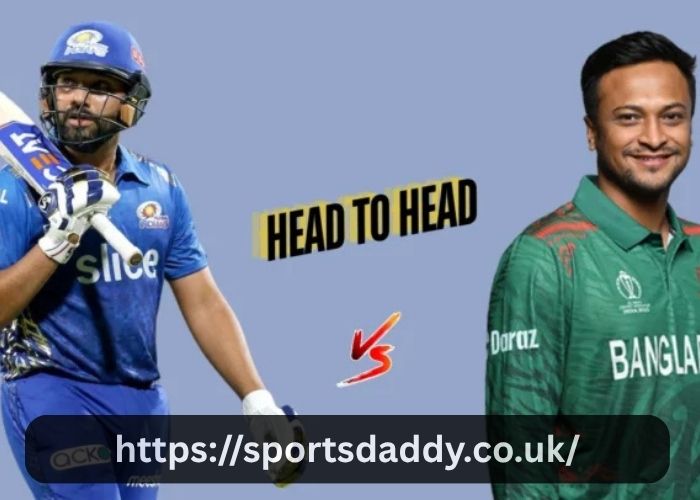
India National Cricket Team Vs Bangladesh National Cricket Team Timeline
The India National Cricket Team vs Bangladesh National Cricket Team timeline is an extraordinary tale of growth, pride and fierce competitive spirit. From dramatic upsets and devastating losses to inspiring victories and exciting finishes.
Bangladesh became Test-playing nations in 2000 and struggled to compete with India’s depth and talent at first. Over time however, they made gains and managed to close the gap significantly.
| Date | Match | Venue | Result | Key Performers |
|---|---|---|---|---|
| 12 Oct 2024 | 3rd T20I | Hyderabad | India won by 133 runs | Sanju Samson 111, Suryakumar Yadav 75 |
| 9 Oct 2024 | 2nd T20I | Delhi | India won by 86 runs | Nitish Kumar Reddy 74, Rinku Singh 53 |
| 6 Oct 2024 | 1st T20I | Gwalior | India won by 7 wickets | Arshdeep Singh 3 wickets, Hardik Pandya unbeaten finish |
| 27 Sep – 1 Oct 2024 | 2nd Test | Kanpur | India won by 7 wickets | Yashasvi Jaiswal 72, KL Rahul 68 |
| 19–22 Sep 2024 | 1st Test | Chennai | India won by 280 runs | Ravichandran Ashwin century & wickets, Jasprit Bumrah 5-for |
The Early Years
Early years of this rivalry featured two key ingredients: contentious moments and chaotic endings. India dominated Test cricket until Bangladesh entered in 2000, fighting hard for their first win against India.
Jagmohan Dalmiya, former ICC president who inducted them into Test cricket with both fanfare and criticism, was such an esteemed figure in Bangladesh that his reception received praise comparable to that of heads of state.
But their relationship took an abrupt turn after 2007, when teenage superstars such as Tamim Iqbal, Shakib Al Hasan, and Mushfiqur Rahim caused shockwaves across cricket with an upset win against India that signalled they had arrived as cricketing powerhouses. That victory defined modern Bangladesh cricket team and is considered an eventful milestone in their development today.
Bangladesh began taking advantage of their home conditions more effectively during bilateral series, leading to tighter contests in ODIs and T20Is.
It gave Bangladesh more confidence with players such as Mustafizur Rahman becoming formidable competitors on the world stage.
But Bangladesh was still not consistent enough in their ability to beat India on a consistent basis, taking time before finally breaking free of their underdog status and winning regularly against India.
When they finally did so it often involved only key moments – most notably at Melbourne Cricket Ground (MCG) where Dinesh Karthik scored an unlikely last-ball six for India against Bangladesh!
Bangladesh had finally managed to overcome India on an important stage and cause an upset, and this moment changed the dynamic between the nations. Naagin dance and Mushfiqur’s fist pump at MCG became signature moments of an emerging team who wanted to prove themselves and were willing to fight hard for what they believed in.
At those times, the rivalry felt personal and unpredictable; since then it has only deepened. When these teams meet now, it is wise to grab snacks, silence group chat, and prepare yourself for an unpredictable experience – one which has evolved through change while maintaining its fierce competitive spirit and remains one of the greatest in international cricket.
The Middle Years
India quickly established an early advantage against Bangladesh during their rivalry, dominating Bangladesh by large margins in the early years. This was expected, given Bangladesh was still developing cricket; their matches with India in the 90s and 2000s gave them valuable exposure to top-level cricket that helped them improve.
Unfortunately for them however, India’s batting prowess led by Sachin Tendulkar, Sourav Ganguly, Rahul Dravid, and Virender Sehwag were simply too powerful for Bangladesh to cope with; nonetheless these games provided invaluable learning experiences for them both sides as they established goals for future matches.
Bangladesh marked an extraordinary turnaround when they beat India in their inaugural ICC World Cup group stage matchup in 2007.
This victory marked Bangladesh as having graduated beyond being seen as underdogs to challenge India more frequently and effectively.
Over time, Bangladesh’s rapid improvement and fearless approach to cricket allowed them to close the gap on India. Bangladesh began winning more ODIs against them while matches became more intense – even though India still won more often overall, they began feeling pressure and playing with an intensity that had previously been unknown in cricket matches.
Bangladesh has continued its surge forward over the last decade and now stands as a legitimate threat to India’s dominance of T20 cricket.
Both teams meet frequently now, creating one of the most thrilling rivalries in Asian cricket – one filled with high stakes matches and thrilling finishes that has captured millions of cricketing fans’ interest across Asia and beyond.
India still tends to win more often, yet Bangladesh’s relentless improvement and fearless approach make for entertaining battles between them that millions follow worldwide.
The Late Years
India-Bangladesh rivalry, known as Asian Clasico, is widely considered one of the biggest sporting rivalries worldwide. But its intensity wasn’t always this intense; early on India’s superior batting power easily overshadowed Bangladesh’s emerging batsmen – but even though these early matches were mostly one-sided for Bangladesh they learned from them and gradually built confidence, leading to the eventual turn in their rivalry.
In 2007, Bangladesh stunned cricketing world when they stunned India at a World Cup group-stage match. Tamim Iqbal, Mushfiqur Rahim and Shakib Al Hasan demonstrated no fear when taking on an established India side featuring stars like Tendulkar, Dhoni and Dravid.
Their victory sent out an important signal: that Bangladesh were no longer pushovers in international cricket competition.
Bangladesh continued to improve and compete against India in T20 cricket, coming close on multiple occasions. At this point in their rivalry, tensions began to heat up even more – Shere Bangla National Stadium crowd became particularly hostile towards visiting Indian team; mocking them with “Mauka mauka” (an advertisement run by Star Sports). Matters became even more heated when an image of Taskin Ahmed holding Dhoni’s severed head went viral online.
Bangladeshi fans’ passion and determination helped their team overcome these difficulties, becoming one of the dominant forces in T20 cricket – rivalry with India at an all-time high!
But in recent years, diplomatic ties between both nations have become tenuous. This became especially clear when Bangladesh pulled out of the T20 World Cup in 2026 due to security concerns in India, leaving Scotland as their replacement – this represented an irreparable damage to their long-held tradition of using cricket to bridge divides during times of tension between their respective nations.
The Finale
Bangladesh and India remain close neighbors, yet still boast significant gaps in cricketing ability. This has become especially apparent since Bangladesh first earned Test status in 2000.
India’s dominance was broken at the 2007 ICC World Cup when an energetic Bangladesh team led by Tamim Iqbal and Mushfiqur Rahim delivered an unexpected upset against tournament favorites with disciplined bowling and fearless batting that proved they could compete on such an elite stage as cricket.
This victory changed forever the narrative of this rivalry and demonstrated Bangladesh could match these teams on such grand stages of competition.
The match marked just the start of an ongoing rivalry between two countries whose cricketing ties became increasingly riven by political tensions.
After Bangladesh’s former Prime Minister Sheikh Hasina was ousted from office in August 2024, relations quickly declined between both nations and eventually turned sour when Mustafizur Rahman decided to sign up for Pakistan’s lucrative T20 league, sparking diplomatic standoff that has yet to be resolved.
Rahman’s decision was an individual one, yet its significance cannot be underestimated: it demonstrated how sports has increasingly become politicized across Asia.
Furthermore, this event demonstrated how even the supposedly impartial International Cricket Council (ICC), which oversees cricket globally, cannot escape political realities: its world championship event no longer acts simply as an athletic competition but serves as a venue where superpowers exert pressure over their neighbouring countries.
On 24 January 2026, tension between Bangladesh and India hit an all-time low as Bangladesh, due to security concerns in India, withdrew from the ICC T20 World Cup tournament and Scotland was chosen as their replacement. This decision meant that South Asian cricket fans would no longer witness their favourite teams compete on an international stage.
Though tensions between both countries remain high, both are committed to keeping their cricketing ties alive and hope to settle their differences soon.
Unfortunately, however, this may prove challenging: both are fighting an uphill battle of domestic politics while simultaneously seeking to meet demands imposed upon them from an international cricket body such as ICC which holds unique power over international cricket.
Also Read:
Zimbabwe National Cricket Team vs India National Cricket Team Match Scorecard
About the Author